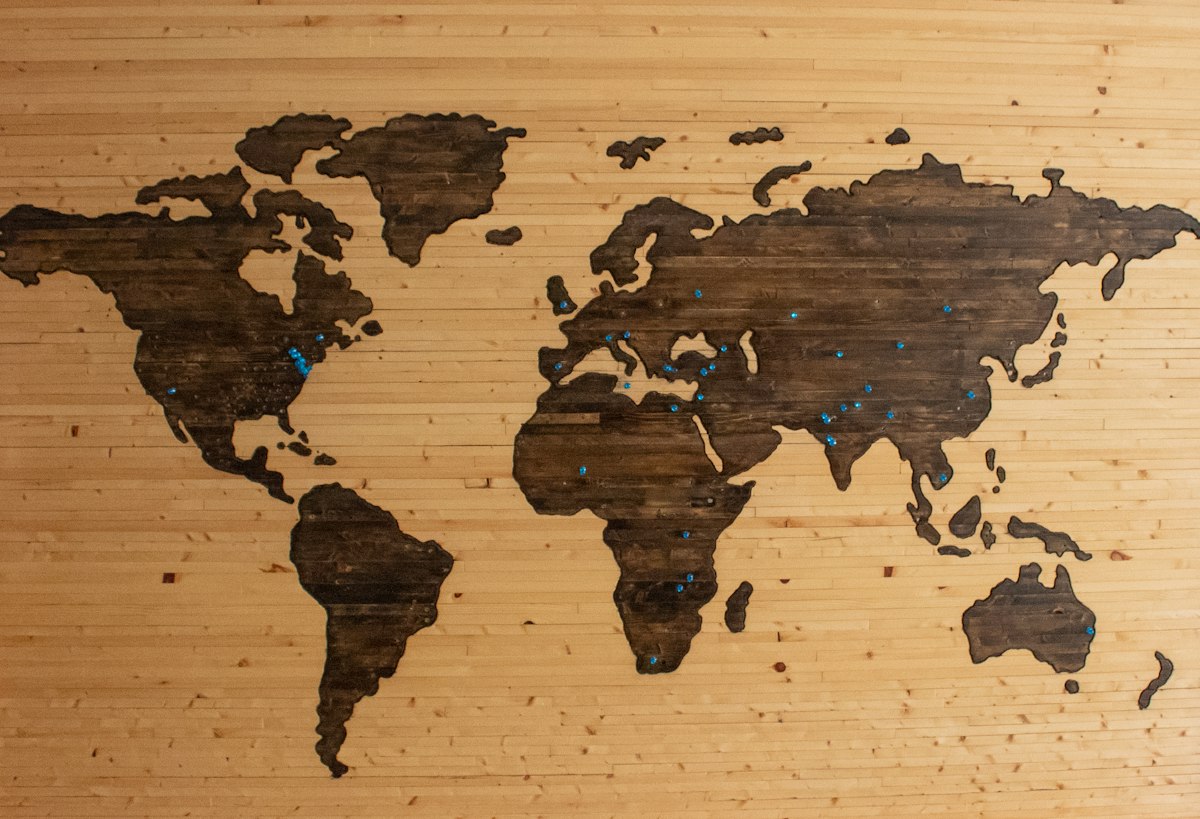
A site only in French, however well designed, often leaves out a significant share of potential clients in Morocco. Part of the population is more comfortable in Arabic, international or tourist clients look for content in English, and some businesses would benefit from also speaking Darija in their communication. Creating a multilingual site in Morocco isn't a luxury reserved for large companies, but a matter of genuine reach.
Translating isn't the same as thinking multilingual
The most common mistake is writing a site in French and then having its content translated word for word into other languages. A literal translation often sounds artificial, especially in Arabic where sentence structure and natural phrasing differ noticeably from French. A genuinely multilingual site adapts the message to each language rather than mechanically transposing it.
Each language deserves its own URLs
Beyond content, a technically well-built multilingual site assigns a distinct URL to each language, rather than only changing the displayed text at the same address. This structure lets each language version get indexed separately by Google, meaningfully improving visibility in each language instead of diluting SEO across them.
Arabic deserves particular attention
Beyond translation, Arabic involves a different reading direction and a layout that needs to adapt to it properly, rather than simply flipping text onto a template designed for French. A site that neglects this technical aspect gives an impression of amateurism to a visitor browsing in Arabic, even if the translated content is otherwise correct.
Do you always need all three: French, Arabic, English?
Not systematically. A business targeting only a local Moroccan clientele in a specific sector can settle for French and Arabic. A business oriented toward tourism or international trade, as we cover in our article on website creation in Marrakech, has more to gain from also investing in English, or even an additional language depending on its specific clientele.
Darija, an often overlooked option
For certain activities that speak directly to the Moroccan general public, particularly on social media or in certain site sections, content in Darija can create a closeness that standard Arabic or French don't achieve the same way. This option should still be used with discernment, generally as a complement to the main languages rather than a replacement for them.
A project that requires a real content budget
A well-made multilingual site represents more writing work than a single-language site, since it's about adapting the message rather than mechanically translating it. We cover this budget in our article on the cost of website creation in Morocco in 2026. This extra cost generally pays for itself quickly through the genuine widening of the audience reached.
A simple example that shows why adapting beats translating
A simple French marketing phrase may sound perfectly natural in its original language, but a literal translation into Arabic or English can come across as odd or even unintentionally funny to a native speaker of that language. A professional translator, or better yet a writer who genuinely masters the target language, rephrases the same idea in a way that feels natural and convincing to its reader, rather than just carrying over the words without the original text's spirit.
Switching languages needs to stay smooth for the visitor
An often overlooked technical detail: switching from one language to another should be simple, ideally a single click, without the visitor losing the page they were on. A visitor forced to start browsing over from scratch after switching languages sometimes simply gives up on their search, which cancels out part of the benefit of offering several languages in the first place.
What a site loses by not investing in this
A business that settles for a single-language site, believing that's enough "for now," often underestimates the size of the opportunity actually being missed. Clients searching in a language that simply isn't available find another competitor who speaks their language instead, without the first business ever getting a chance to prove the actual quality of its offer. This loss, invisible in day-to-day numbers, quietly builds up over months and years.
FAQ
Is automatic translation enough for a professional site?
No, automatic translation often produces awkward phrasing that hurts the site's professional image, especially in Arabic.
Do I need to translate all the site's content into each language?
Not necessarily in full; essential pages should be available in each language, the rest can follow gradually.
Does SEO work differently depending on the language?
Yes, each language has its own keywords and its own competition, requiring a distinct content strategy for each.
Is a French-Arabic bilingual site enough for most Moroccan businesses?
In many cases yes, unless the activity is oriented toward international or tourist clients, which justifies adding English.
Want a site that genuinely speaks to all your potential clients? Discover our approach to website creation or let's talk about your project.
Never miss an article
Join our readers and get weekly insights on SEO, web design and digital marketing for the Moroccan market.