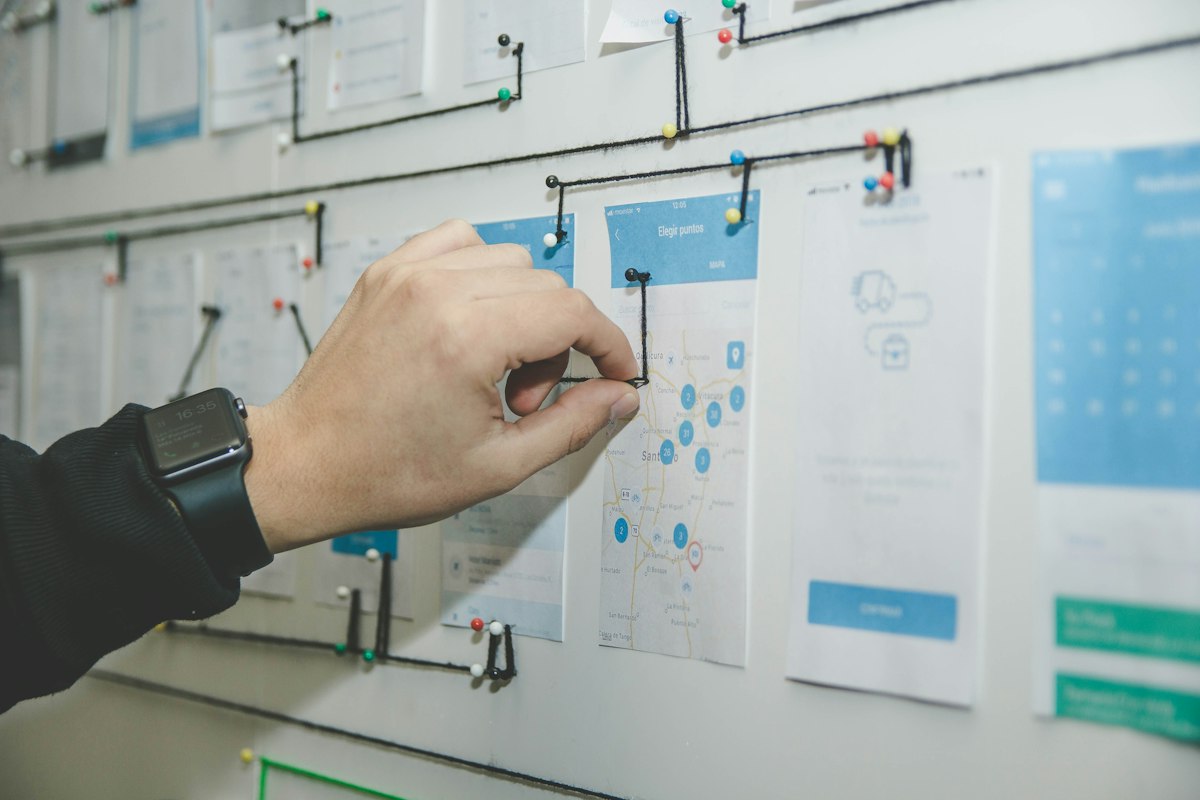

Many Moroccan SME owners approach digitalization as one massive undertaking to plan all at once, which partly explains why so many of these projects never actually get off the ground. In reality, digitalizing an SME means making a series of concrete, progressive choices — a website, a management tool, a social media presence, an online payment method — rather than launching an overnight, all-encompassing transformation. Understanding this completely changes how the topic gets approached.
Where to Actually Start
The first priority, almost always, remains basic online presence: a professional website that clearly presents the business, and an up-to-date Google Business Profile listing to appear in local searches. Without this foundation, any further digital investment stays fragile, because customers searching for the business online simply don't find it. Once this base is in place, digitalization can extend toward business management, customer communication, or online selling, depending on the activity's real priorities.
The Tools That Actually Change a Small Business's Daily Routine
Beyond the website, a few simple tools quickly transform how a small business operates: WhatsApp Business to structure customer relationships without changing communication habits, a billing or management tool to replace improvised spreadsheets, or a professional email address that strengthens credibility with customers and partners. These tools share one thing in common: they require limited investment and produce a visible result quickly, unlike heavier projects that take months to pay off.
Why So Many SMEs Keep Postponing This Shift
Lack of time, fear of technical complexity, and uncertainty about return on investment largely explain why digitalization keeps getting postponed in many Moroccan SMEs. This delay has a real cost, though, even if it stays invisible on the business's books: customers turning to more visible competitors online, an image perceived as outdated, and a gap that widens over time against competitors who made this shift earlier.
Digitalizing Without Turning Everything Upside Down
The most effective digitalization doesn't try to change everything at once — it improves specific points that are actually holding the business back, one at a time: too much time lost on administrative tasks, too little online visibility, disorganized customer communication. Prioritizing these points one by one, rather than aiming for a total, theoretical transformation, allows for real progress without disrupting a team already busy running the day-to-day business.
Measuring Results, Not Just "Having Done It"
Digitalizing without measuring impact is moving blind. Does a new website generate contact requests? Does a management tool actually save time every week? These simple questions reveal whether digital investments are paying off, and allow the next priorities to be adjusted based on what actually works, rather than what looked promising on paper.
Involving the Team, Not Just Management
A digital tool only the owner masters rarely ends up producing the hoped-for impact. Digitalization succeeds especially when the team actually using the tool daily understands why the change was made, not just how to click the right buttons. Taking the time to explain the concrete benefit of a new tool for each person's daily work, rather than imposing it without explanation, considerably reduces resistance to change and speeds up its real adoption on the ground.
Choosing the Right Partner for the First Steps
Many Moroccan SMEs try to handle digitalization entirely on their own, piecing together free tools and generic tutorials, which often results in a fragile setup that breaks down as soon as something slightly unusual comes up. A single external partner who can advise on the website, the basic tools, and how they connect to each other saves considerable time compared to juggling several unrelated providers. This doesn't mean outsourcing every decision — it means having someone to ask before making a costly mistake, especially during the first year when most digitalization habits get set for good, whether those habits end up helping growth or quietly holding it back later.
Starting Small, Then Scaling Up Gradually
There's no need to launch every possible tool at once. A business that starts with a simple website and a Google Business Profile listing, and truly masters both before moving to the next tool, builds a sturdier foundation than one trying to roll out five different tools in the same week without mastering any of them. This gradual approach gives the team enough time to adapt to each change before facing the next one, reducing the digital fatigue that sometimes pushes entire teams to abandon tools that could have been genuinely useful if introduced at a slower, more realistic pace.
FAQ
Which digital tool should a small Moroccan business start with?
In the vast majority of cases, a professional website and a well-configured Google Business Profile listing form the most profitable foundation to start with.
Does digitalization necessarily cost a lot?
No — many useful tools (WhatsApp Business, professional email, simple management tools) represent a limited investment compared to their impact.
How long before seeing the first results of digitalization?
Some tools, like a well-optimized Google listing, show effects within a few weeks; others, like site SEO, take several months.
Does digitalizing an SME require an internal IT department?
No — most current tools are designed to be used without advanced technical skills, and occasional external support is usually enough to get started.
Brandora helps Moroccan SMEs digitalize their business step by step, starting with the foundations that have the most real impact. Discover our website creation approach or let's talk about your digitalization project.
Never miss an article
Join our readers and get weekly insights on SEO, web design and digital marketing for the Moroccan market.